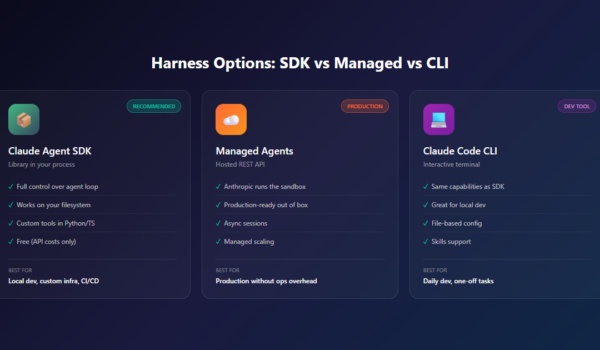
Every agent architecture article talks about LLMs, tools, and skills. Nobody talks about the thing that actually makes them work: the harness. It’s the runtime that takes your prompt, decides what tools to call, manages context, handles errors, and returns a result. Without it, you have components. With it, you have an agent. This is […]
Category: Architecture & Design
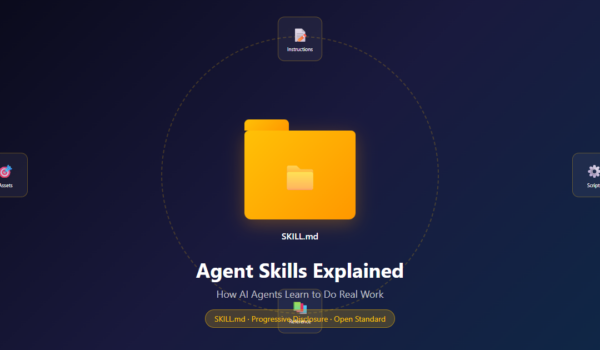
Agent Skills Explained: How AI Agents Learn to Do Real Work
Most AI agents today are still just chatbots with a tool call bolted on. They can chat, but they can’t reliably do specialised work. The ones that ship real value — document editing, brand compliance, data analysis, deployment — have something the others don’t: Skills. Agent Skills are an open standard from Anthropic for packaging […]
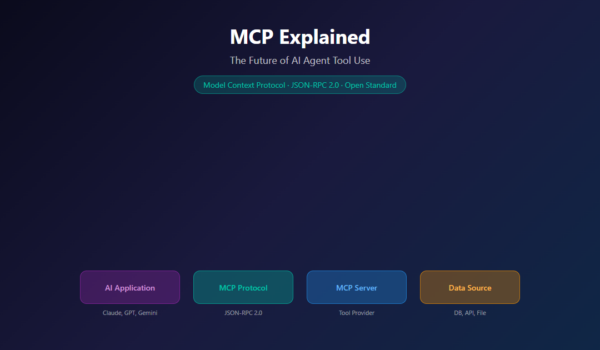
MCP Explained: The Open Standard That Makes AI Agents Actually Useful
AI models are powerful, but they’re stuck in a box. They can reason about text, generate code, analyse data — but they can’t click buttons, query databases, or publish content without help. Every team solving this problem was building the same integration over and over: custom glue code, per-model adapters, brittle workflows. Model Context Protocol […]
Vue 3 vs React for Enterprise SaaS
The framework debate that actually matters when you’re building for production. An honest comparison of Vue 3 and React for enterprise SaaS.
TorqueBooks: Building a Workshop Management System for South African Auto Shops
How we built TorqueBooks — a multi-tenant workshop management system using PocketBase, React, and Keycloak. Real war stories from 8 weeks of development.
Self-Hosted AI vs Cloud APIs: What South African Businesses Need to Know
Comparing self-hosted AI to cloud APIs for South African businesses. Real cost analysis with 2026 pricing, infrastructure requirements, POPIA compliance, and when each approach makes sense.
From Rebuilding Authentication in Every App to a Shared Identity Layer
Stop rebuilding authentication in every app. Learn how to build a shared identity layer that handles OAuth, federation, and user management once — so every application in your ecosystem can inherit it. Covers email normalization, token boundaries, and the critical difference between authentication and authorization.