Self-Hosted TTS with Kokoro ONNX: What CPU-Only Inference Actually Gets You
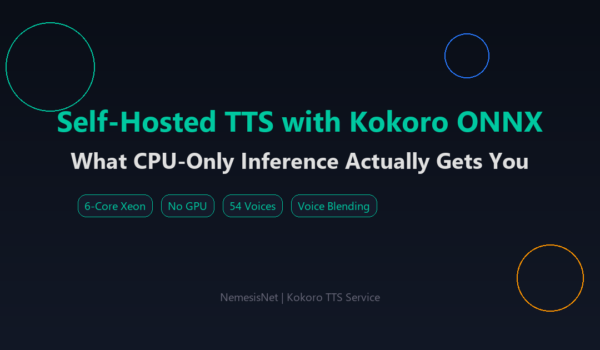
Building a smart-home TTS stack on hardware you already own — no GPU, no cloud API, no bill. We wanted text-to-speech for automation triggers that runs locally, on existing CPU hardware, without sending every doorbell announcement through a third-party API. So we built a FastAPI service around Kokoro ONNX with voice blending, dialogue scripting, and […]

Building Since: A Self-Hosted Claim Tracker with PocketBase, React, and Express

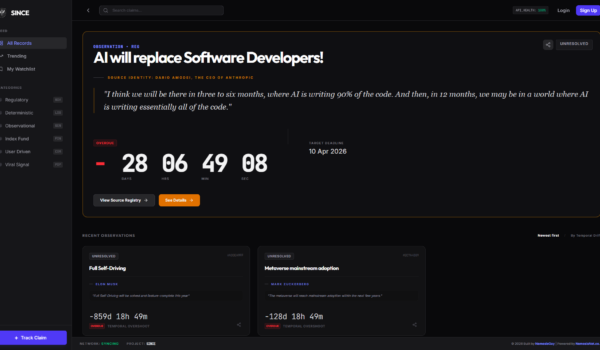
since homepage screenshot

Every prediction someone makes online deserves accountability. We built Since — a self-hosted temporal claim tracker — to register predictions, record past events, attach evidence, open disputes, and verify outcomes over time. The stack is deliberately lightweight: React 19, PocketBase, Express.js, and Docker. Here’s why we chose each piece, what surprised us, and what we’d […]

ForkMyFolio Backend: Designing a Modern, Multi-User Portfolio Platform in Spring Boot

ForkMyFolio_Logo

This long-form deep dive unpacks how ForkMyFolio’s backend turns a simple personal portfolio into a multi-user, slug-driven, production-ready platform built on Java 21 and Spring Boot 3. TL;DR Layered Spring Boot architecture — controllers, services, repositories, DTOs, and mappers with strict boundaries. Multi-user by design: users, UUIDs, and slugs so one backend safely hosts many portfolios. Security […]

Inside the NemesisNet Homelab: My Personal Data Center

The NemesisNet Homelab: A Personal Data Center Most people build a gaming PC. I built a full-stack, self-hosted platform that powers everything from development to analytics. TL;DR A personal data center run by one person — sysadmin, network engineer, and SRE in a single body. Full hardware tour and capabilities inventory — what runs where, […]