Self-Hosted TTS with Kokoro ONNX: What CPU-Only Inference Actually Gets You
Building a smart-home TTS stack on hardware you already own — no GPU, no cloud API, no bill. We wanted text-to-speech for automation triggers that runs locally, on existing CPU hardware, without sending every doorbell announcement through a third-party API. So we built a FastAPI service around Kokoro ONNX with voice blending, dialogue scripting, and […]

Building Since: A Self-Hosted Claim Tracker with PocketBase, React, and Express

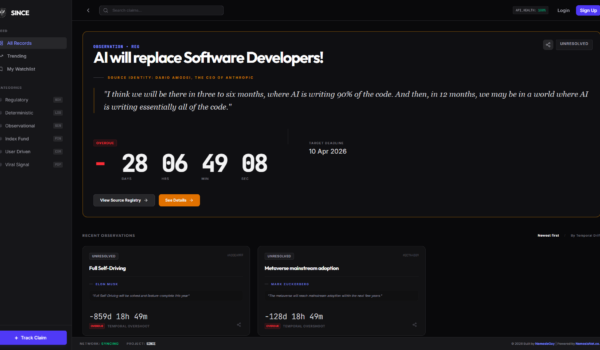
since homepage screenshot

Every prediction someone makes online deserves accountability. We built Since — a self-hosted temporal claim tracker — to register predictions, record past events, attach evidence, open disputes, and verify outcomes over time. The stack is deliberately lightweight: React 19, PocketBase, Express.js, and Docker. Here’s why we chose each piece, what surprised us, and what we’d […]

Agent Harness Explained: The Runtime That Makes AI Agents Actually Work

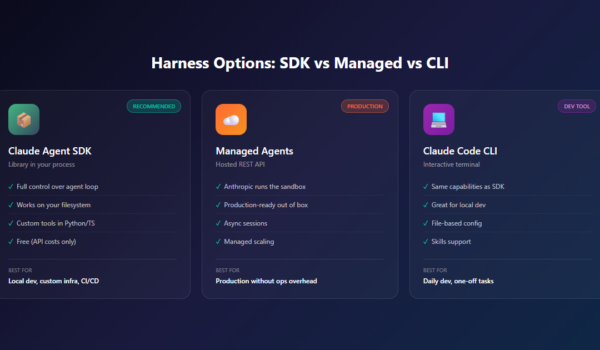
Every agent architecture article talks about LLMs, tools, and skills. Nobody talks about the thing that actually makes them work: the harness. It’s the runtime that takes your prompt, decides what tools to call, manages context, handles errors, and returns a result. Without it, you have components. With it, you have an agent. This is […]

Agent Skills Explained: How AI Agents Learn to Do Real Work

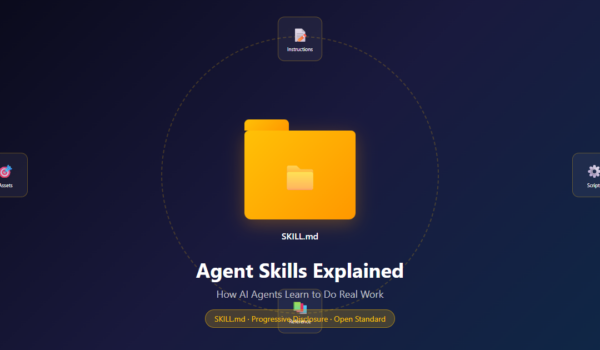
Most AI agents today are still just chatbots with a tool call bolted on. They can chat, but they can’t reliably do specialised work. The ones that ship real value — document editing, brand compliance, data analysis, deployment — have something the others don’t: Skills. Agent Skills are an open standard from Anthropic for packaging […]

MCP Explained: The Open Standard That Makes AI Agents Actually Useful

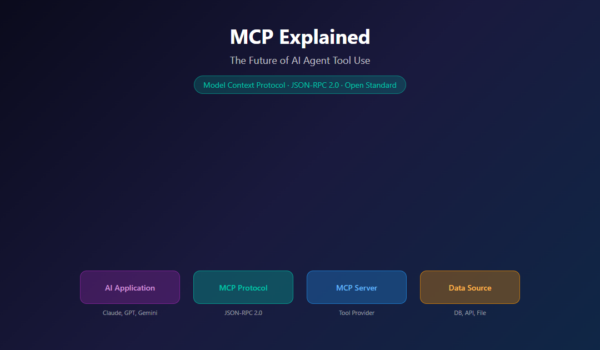
AI models are powerful, but they’re stuck in a box. They can reason about text, generate code, analyse data — but they can’t click buttons, query databases, or publish content without help. Every team solving this problem was building the same integration over and over: custom glue code, per-model adapters, brittle workflows. Model Context Protocol […]

VibeType: Building a Local-First Voice Coding Companion

Hands-Free, Privacy-First Dev Tooling VibeType: Building a Local-First Voice Coding Companion VibeType is a Windows-focused desktop assistant that keeps every syllable on-device while translating your voice into code, commands, and realtime status updates. Below is the full story—how it works, why privacy matters, and what comes next. Origin Story: From Dictation Fatigue to Flow State […]